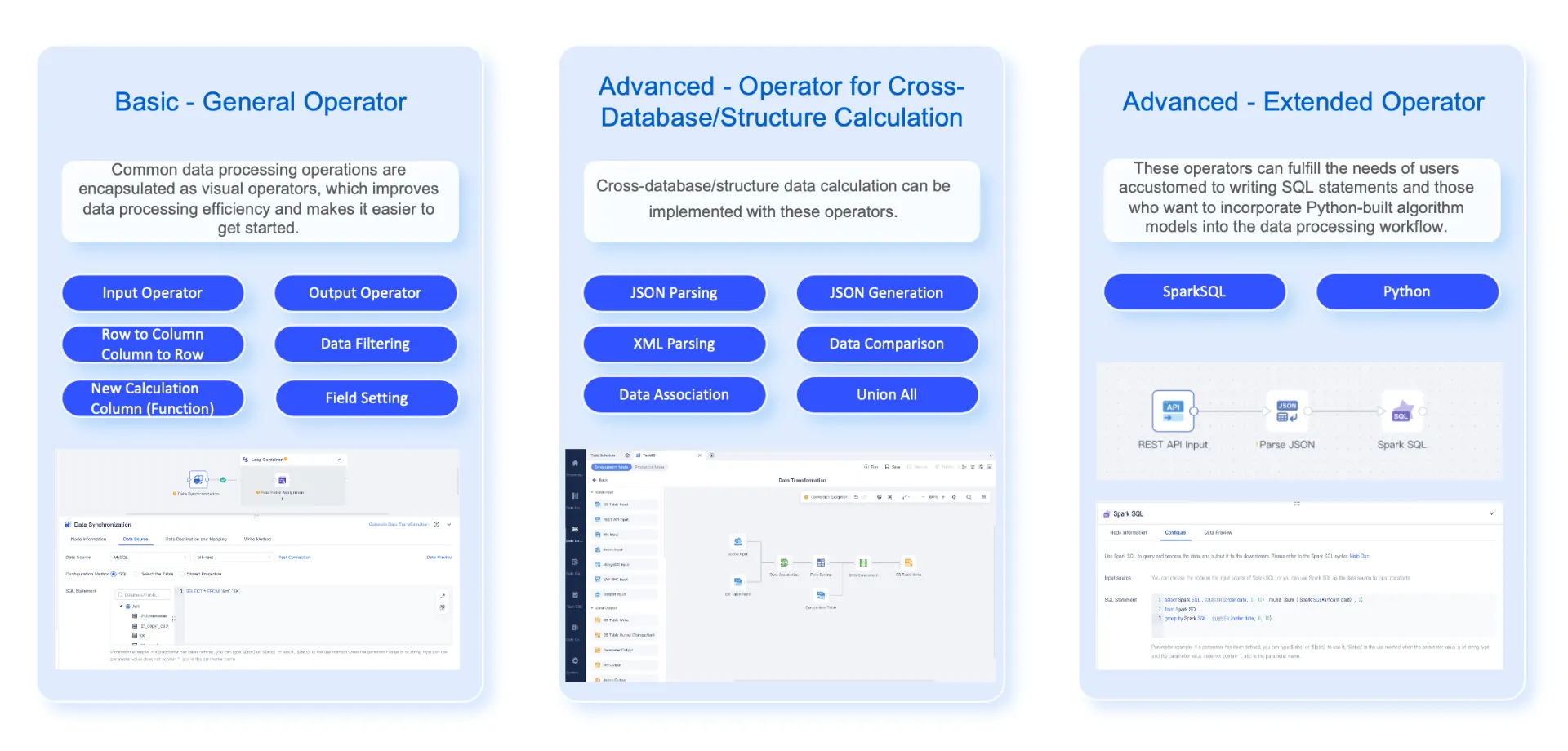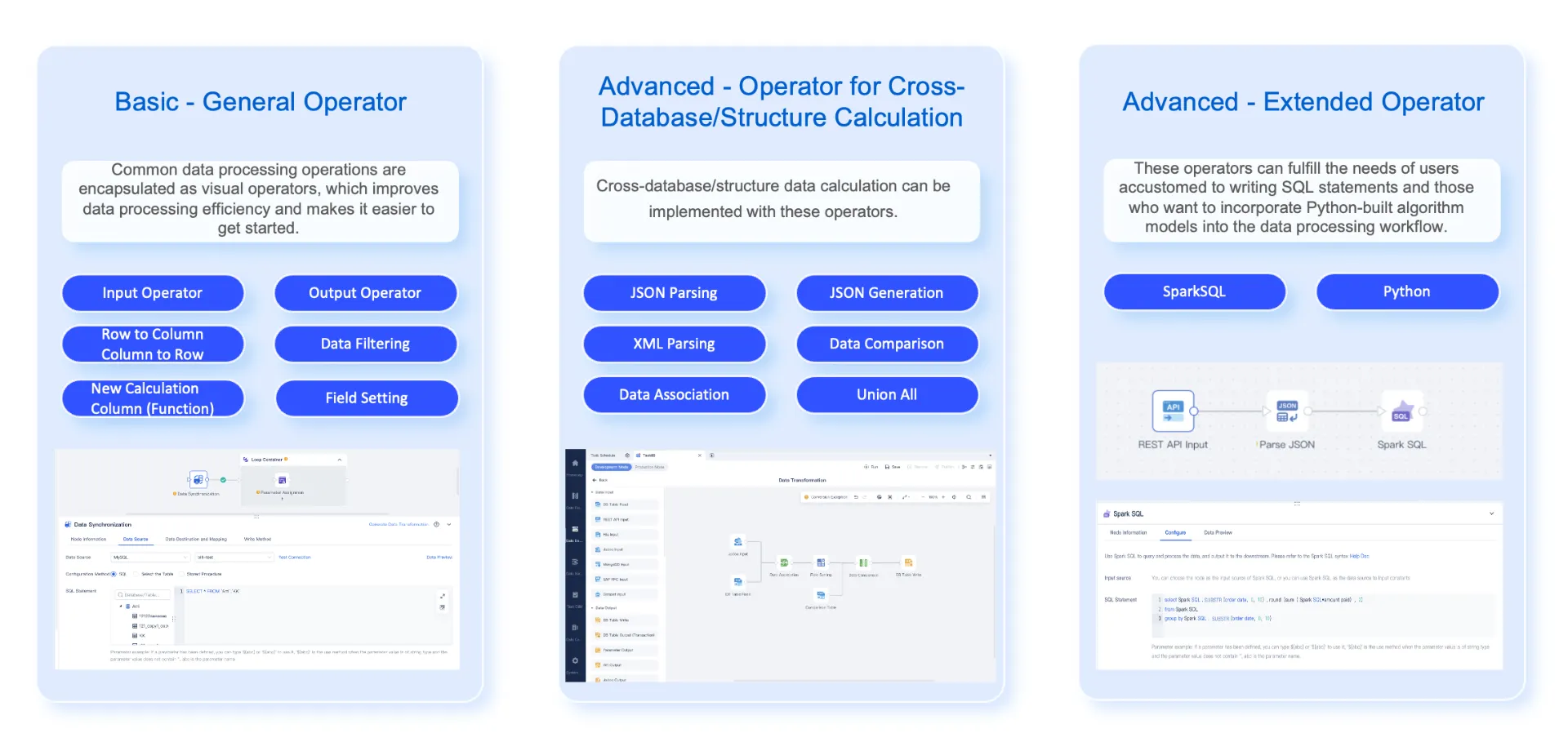





RPA_Business Data Intelligence (BDI) is a complete solution. It utilizes technologies such as data extraction, data cleansing, data warehousing, data mining, data analysis, and data visualization to help enterprises collect, integrate, and analyze data from different business systems. This enables enterprises to understand their own business operations in real-time and accurately, thereby identifying potential problems and opportunities, optimizing business processes, enhancing market competitiveness, and achieving efficient transformation from data to insights and then to action, providing strong support for enterprise decision-making.

How It Works

How It Works

01

Process Recording

RPA tools create the foundational template for automation processes by recording the steps a user performs on a computer, such as mouse clicks, keyboard inputs, data reading and writing, etc.


02

Rule Setting

Define detailed operation rules and logic for the robot based on business requirements, including when to perform specific operations, how to handle different situations and data, etc.

03

Execution and Monitoring

RPA robots automatically execute tasks according to set rules and processes across various applications and systems, and monitor the execution status of tasks in real-time. When encountering abnormal situations, they can handle them according to preset mechanisms or issue alerts.


Process Recording
Execution and Monitoring

Key Technologies

Key Technologies

01

Screen scraping technology

Used to identify various elements on the computer screen, such as windows, buttons, text boxes, etc., so that the robot can accurately locate and operate these elements.

02

Optical Character Recognition (OCR) Technology

can convert text information in images into a text format that machines can understand and process, enabling robots to handle documents, invoices, and other materials containing text.

03

Process Orchestration Technology

Arrange and combine various operational steps and tasks according to a certain logical sequence to form a complete automated process.


Screen scraping technology
Optical Character Recognition (OCR) Technology
Process Orchestration Technology

Application Scenarios

Application Scenarios

01

Finance field

Can automatically complete tasks such as invoice processing, financial report generation, and expense reimbursement review.

02

Human Resources Field

Can handle employee onboarding and offboarding processes, automatically perform attendance data statistics and salary calculation tasks.

03

Customer Service Field

Can automatically reply to common questions, handle customer orders, update customer information, etc.

Finance field Human Resources Field Customer Service Field

Advantage Highlights

Advantage Highlights

High cost-effectiveness

High cost-effectiveness

Reduce manual operations, lower labor costs, improve work efficiency, and quickly achieve return on investment.


High accuracy

High accuracy

Avoids human errors and ensures the accuracy and consistency of task execution.


High flexibility

High flexibility

Can quickly adjust and deploy automated processes according to business needs, adapting to business changes.